Every Era He Walked Forward · Made in the Shorts tab
Four hundred years.
One camera move.
Every Era He Walked Forward follows one man from a 1620 shoreline to a ridge at dawn in a single 30-second take. The world changes five times and you never see a cut, because every change happens while something covers the lens. Here is the full prompt, and how each handoff was written.
Watch the film
Seamless AI video transitions,
all written into one prompt.
How Every Era He Walked Forward was made: one prompt in the Pray Production Studio Shorts tab, on Seedance 2.5 at 30 seconds in 1:1 with the Cinematic Live Action style. Nothing was edited together. The prompt locks one camera move, gives each era about five seconds, and ends every era on something that sweeps across the lens. A 480p draft was rolled first and finalized to 1080p.
The short answer
How to make an AI video
look like one camera move.
- 01
Lock one camera move for the whole take.
Call it a single continuous take and pin the camera: behind him, at shoulder height, about two meters back, in one steady forward track that never stops. Every era is framed the same way, so the eye never registers a cut.
- 02
Cover the lens at every handoff.
End each timed beat with something that fills the frame: a sailor and his crate, musket smoke, a galloping horse, a charging bull, a wall of black smoke. The world changes while the lens is covered.
- 03
Open the next beat inside the wipe.
Start the next beat with the thing that covered the lens: “Behind the sailor”, “Out of the dust”, “Through the dirt”, “Out of the smoke”. That one phrase is what stitches two eras into one move.
The five handoffs
Every cut happens
while the lens is covered.
Each timed beat ends with something crossing or filling the frame, and the next beat begins inside it. Here is every handoff as three frames from the film, with the two lines of the prompt that make it.
Leaving 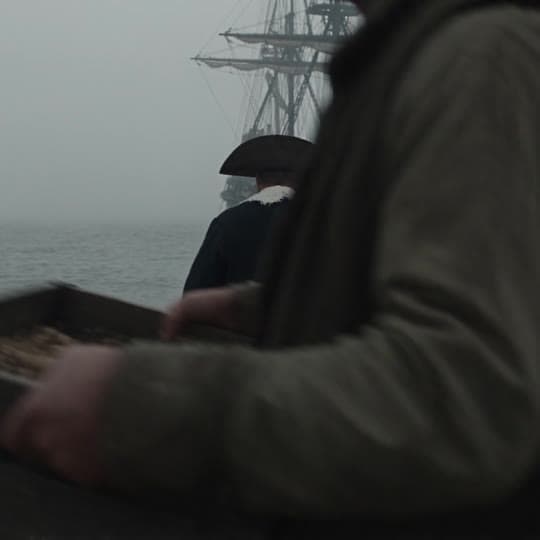
The wipe 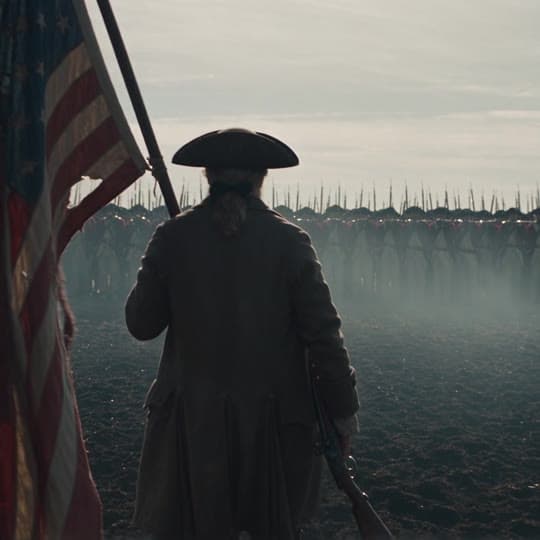
Arriving 01 · 0:05 · 1620 to 1776
A sailor crosses the lens
- Ends the beat
- “A sailor hauling a crate crosses close in front of the lens.”
- Opens the next
- “Behind the sailor, the man now wears a weathered dark coat and tricorn hat and carries a torn thirteen-stripe flag on a pole…”
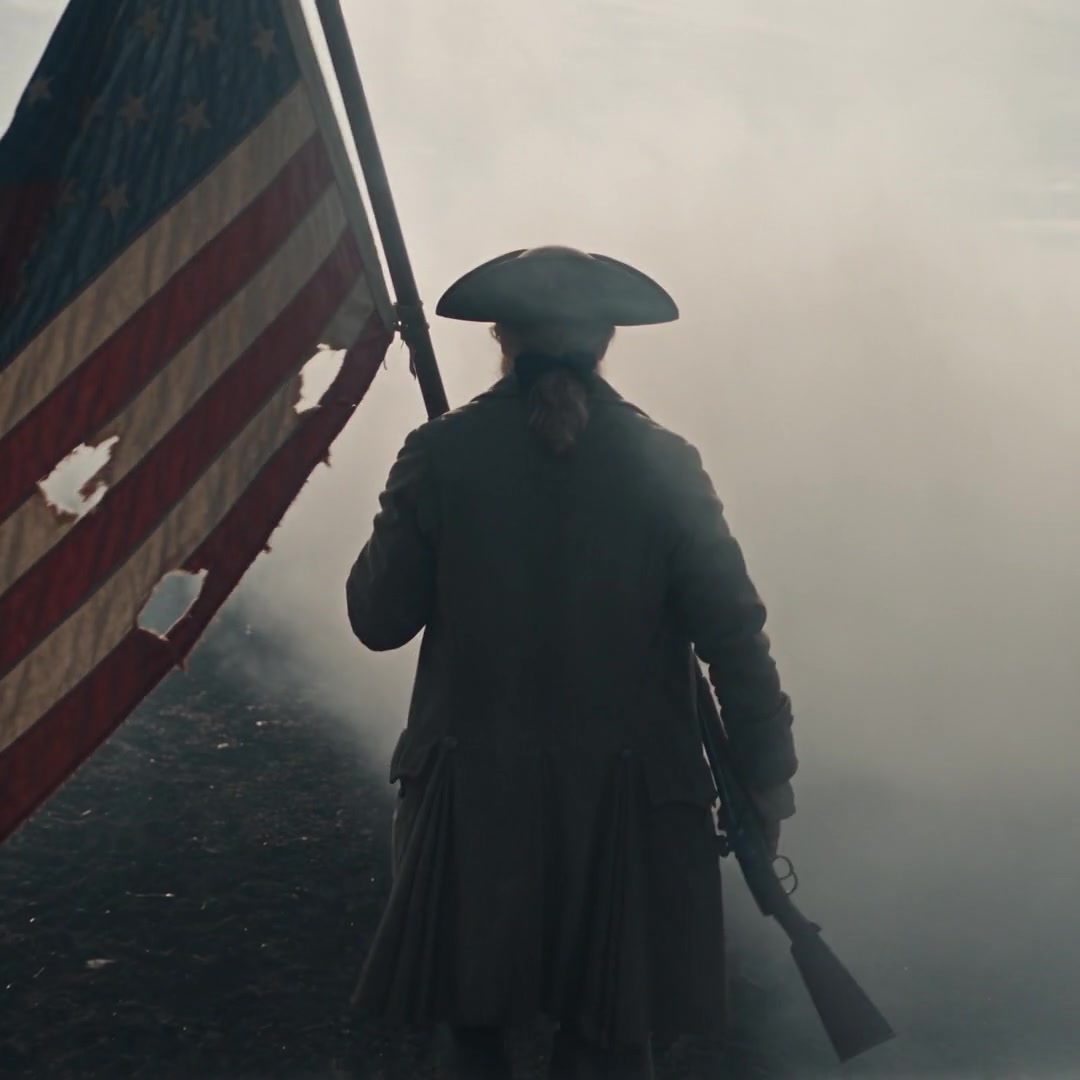
A foreground wipe. For about half a second the sailor’s shoulder and crate fill the frame. When he clears, the shoreline is a battlefield and the cloak is a soldier’s coat. The camera never stopped tracking, so it reads as the man walking past the sailor, not as an edit.
Leaving 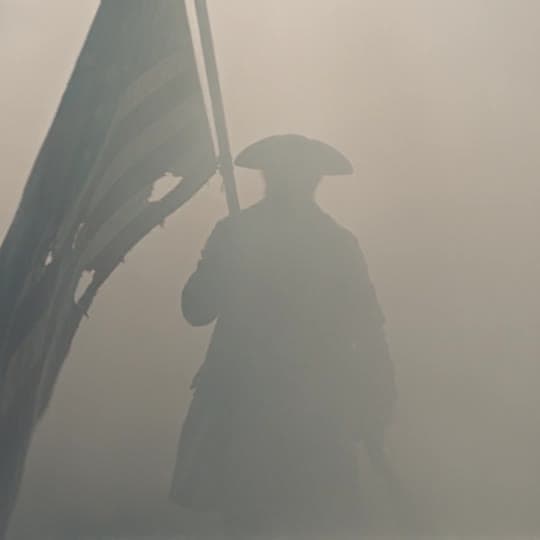
The wipe 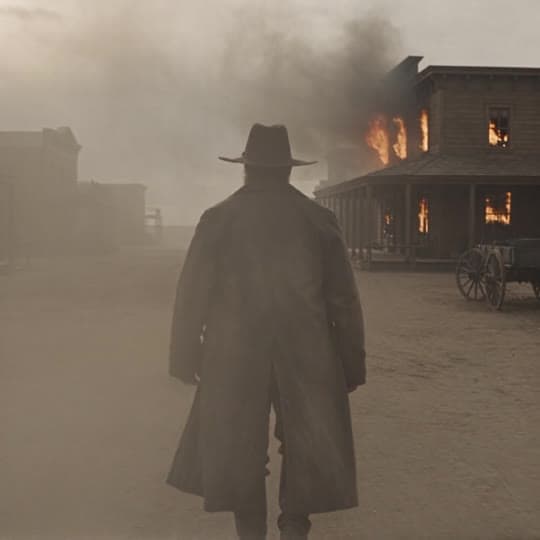
Arriving 02 · 0:09 · 1776 to The 1870s
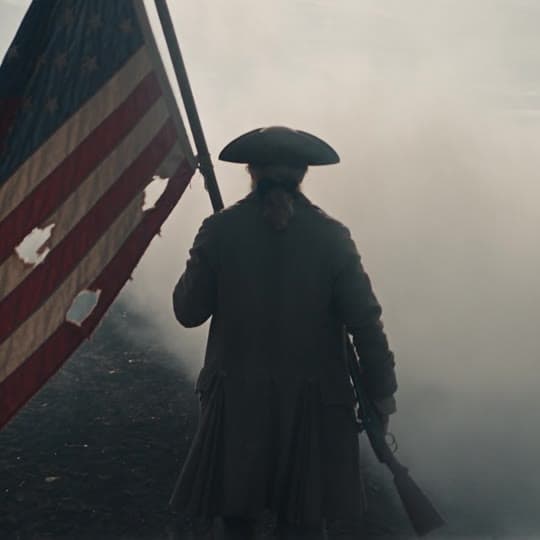
Musket smoke whites out the frame
- Ends the beat
- “A line of soldiers fires a volley; white musket smoke rolls in and fills the frame.”
- Opens the next
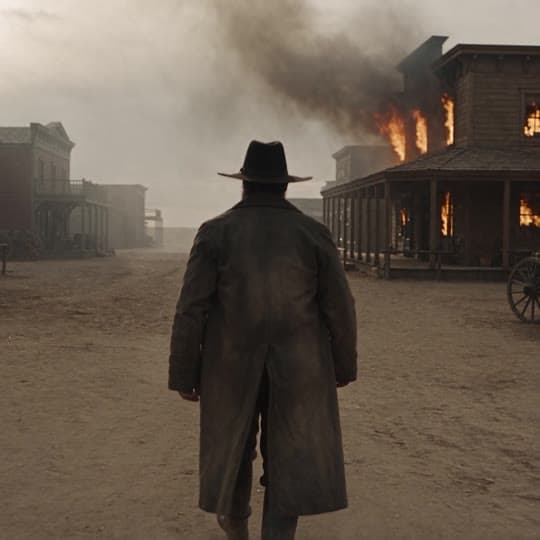
- “The smoke thins to blowing dust: he walks down a dirt street in a long ragged duster and black cowboy hat…”
A white-out with a reason to exist. The volley makes the smoke part of the scene, so it never feels like an effect. Then the prompt changes what the smoke is made of: musket smoke thins into frontier dust, and the town is already standing behind it.
Leaving 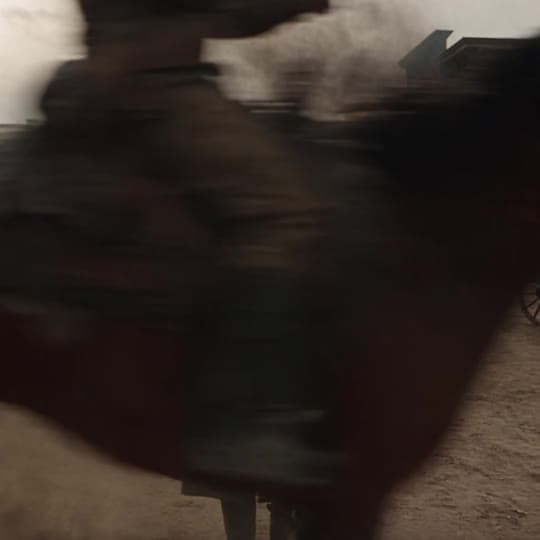
The wipe 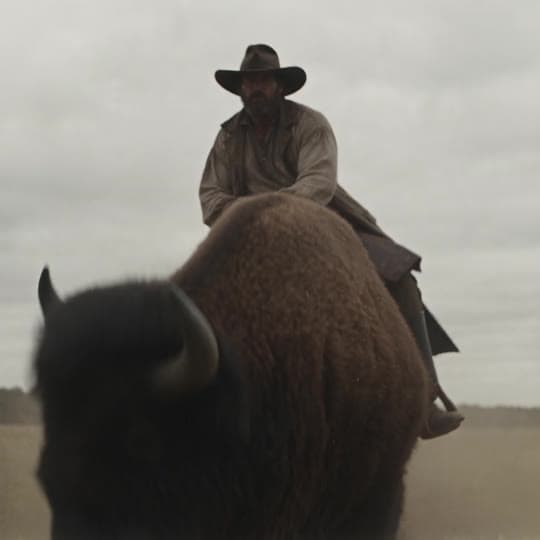
Arriving 03 · 0:14 · The frontier town to The cattle drive
A horse gallops past the lens
- Ends the beat
- “A galloping horse crosses close in front of the lens, kicking up a wall of dirt.”
- Opens the next
- “Out of the dust he rides a bucking black longhorn bull, low angle, hat brim shading his face…”
Two wipes stacked: the horse’s body crosses first, then the dirt it kicks up covers what is left. This is the one handoff that also moves the camera, from behind him on foot to a low angle on the bull, and the dust hides that change too.
Leaving 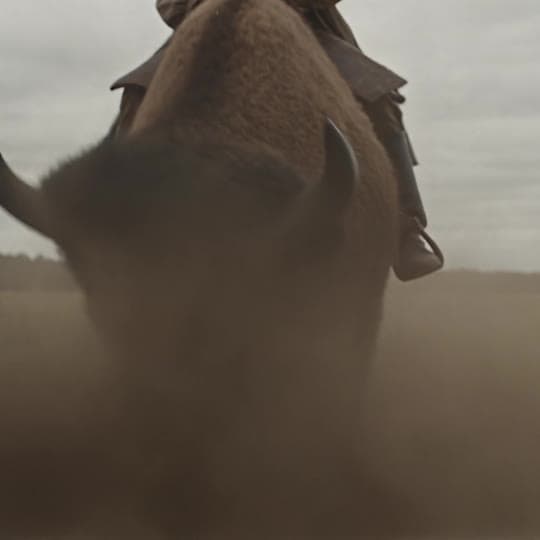
The wipe 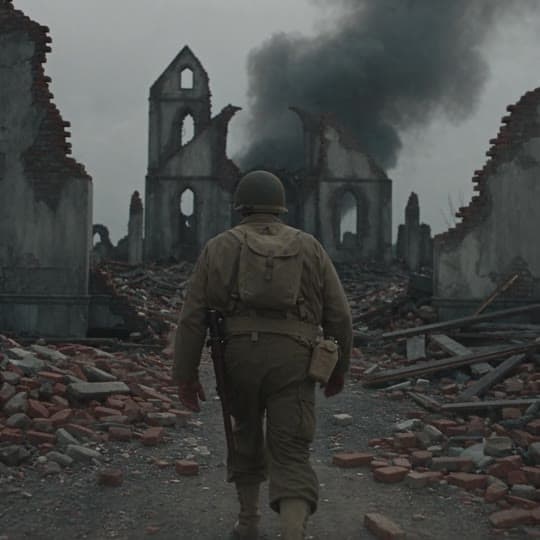
Arriving 04 · 0:21 · The cattle drive to 1944
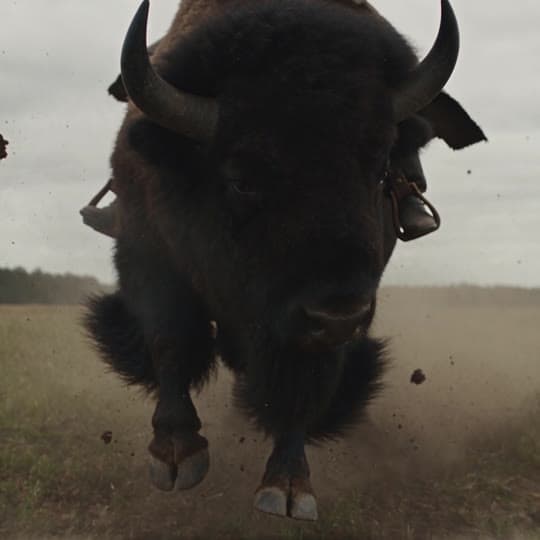
The bull charges into the lens
- Ends the beat
- “Clods of dirt fly into the lens.”
- Opens the next
- “Through the dirt, he walks over rubble in a muddy olive combat uniform, netted steel helmet and heavy pack…”
The subject becomes the wipe. The bull charges straight at the camera until its body and the dirt fill the frame, and when it clears the camera is back behind a soldier. The speed ramp just before it (extreme slow motion, then a snap back to real time) sells the impact and hides the reset.
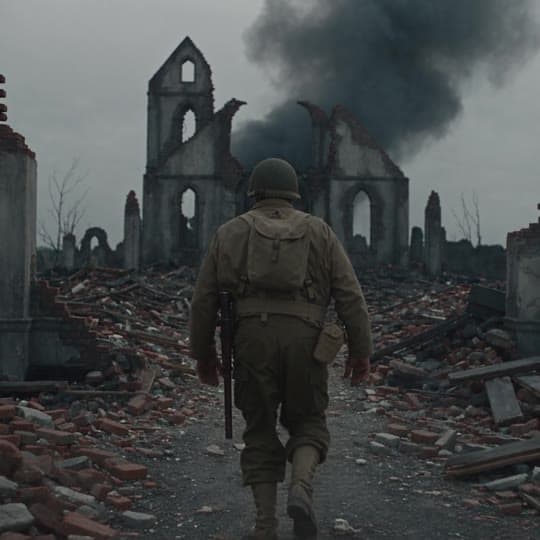
Leaving 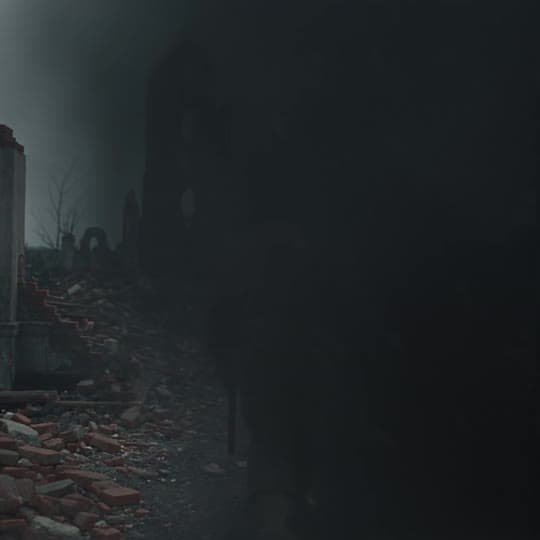
The wipe 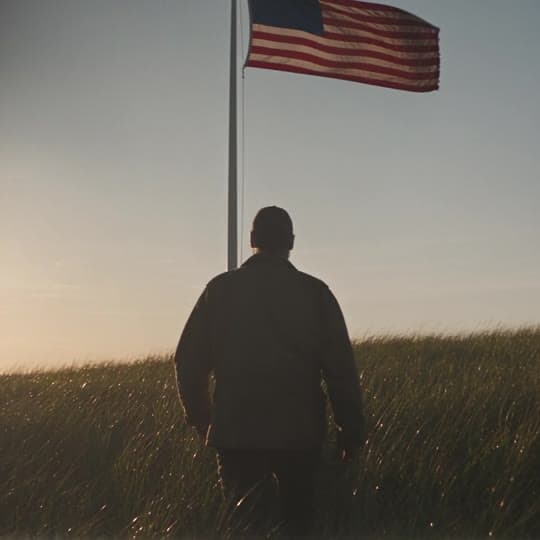
Arriving 05 · 0:25 · 1944 to Today
Black smoke sweeps across the frame
- Ends the beat
- “A thick wall of black smoke sweeps across the frame.”
- Opens the next
- “Out of the smoke he walks in a plain dark work jacket and cap toward a large American flag snapping on a tall pole…”
A black-out that opens on dawn. The darkest wipe in the film lands right before its brightest frame, so the last era arrives like a sunrise. Then the camera rises past his shoulder, the only new move in the film, which tells the viewer this is the ending.
The rules
Why five changes
read as one shot.
The wipes only work because the rest of the prompt holds still around them: one camera position, one man whose face is never seen, one grade and one kind of air in every era.
The timing
Six settings,
about five seconds each.
The thirty seconds are written as six timed beats. Each names the era, the costume, the world around him and the thing that will cover the lens on the way out.
01 · 0 to 5s
1620
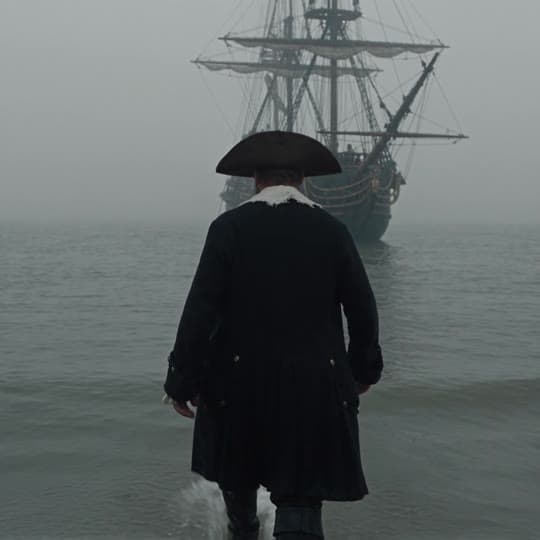
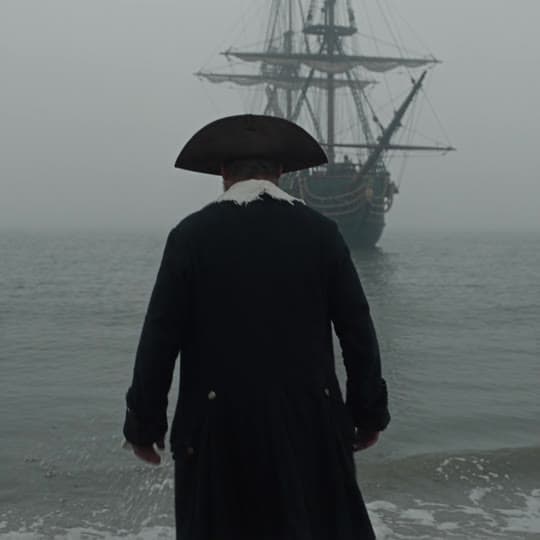
He wades out of grey surf, a tall ship in the fog behind him.
02 · 5 to 10s
1776
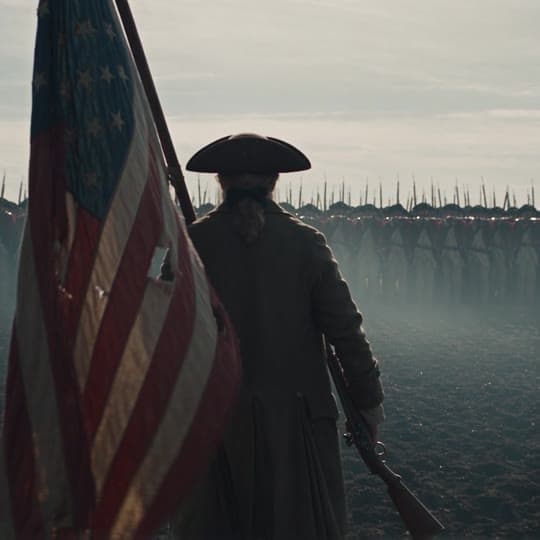
A smoking battlefield and a torn thirteen-stripe flag.
03 · 10 to 15s
The 1870s
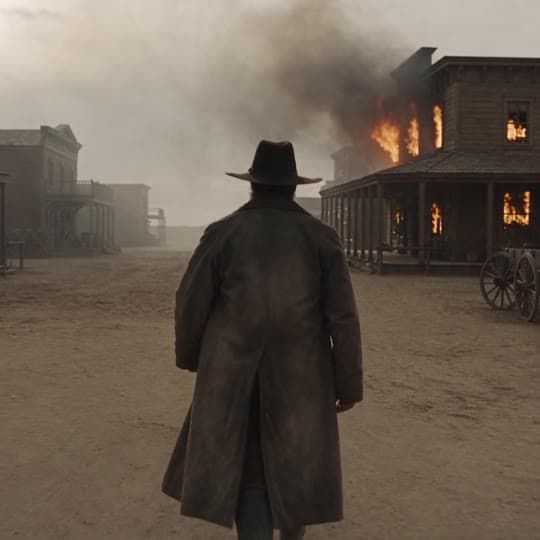
A dusty frontier street, a saloon burning ahead.
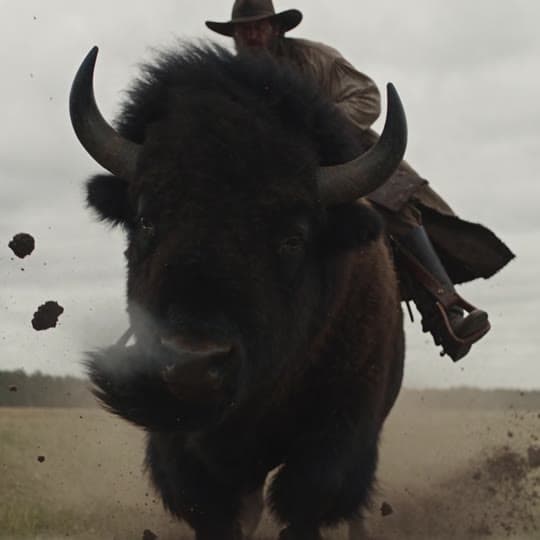
04 · 15 to 21s
The cattle drive
A bucking bull, slowed to a crawl, then snapped back.
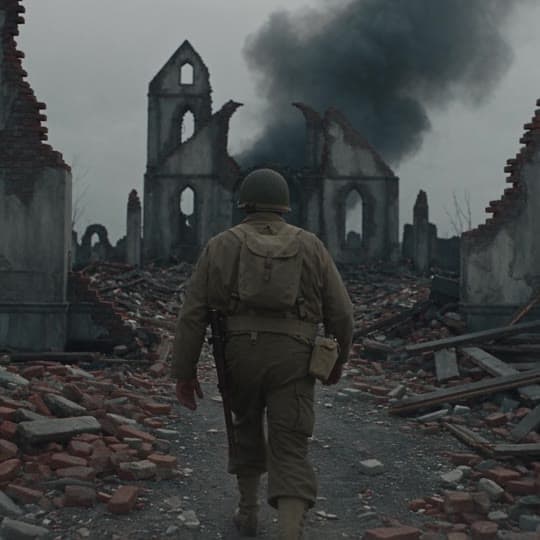
05 · 21 to 26s
1944
A ruined European town and a shattered stone church.
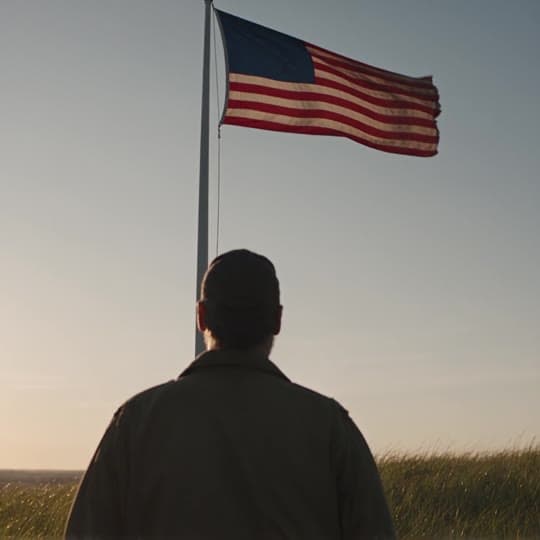
06 · 26 to 30s
Today
A grassy ridge at dawn, beneath the flag.
Tip: Watch your 480p draft against the prompt before you finalize. Seedance made two choices of its own here: the longhorn bull came back as a bison, and the 1620 hat looks more like a tricorn than a wide brim. Neither broke a handoff, so this take was the keeper. If a wipe had missed, a new draft costs a fraction of a 1080p render.
The full prompt
Every word
of Every Era He Walked Forward.
Exactly as it was generated in the Shorts tab: Seedance 2.5, 30 seconds, 1:1, the Cinematic Live Action style. Keep the structure, change the eras.
NO BACKGROUND MUSIC, no music, no score. Audio is natural sound effects only. Shot on a 50mm anamorphic lens with shallow depth of field and heavy 35mm film grain. Flat, cold overcast daylight under a pale grey-white sky, deeply desaturated with crushed blacks and muted earth tones; the only color is faded brick red in the flags. Smoke and dust hang in the air in every scene.

Standing state: ONE MAN, the same man in every era: tall, broad-shouldered, lean, unhurried stride. His face is NEVER seen: the camera stays behind him, or a hat brim, deep shadow or drifting smoke hides his face whenever he turns. His clothes change with each era; his build, walk and posture never do.

Scene Action: The man walks forward through four centuries of America in one unbroken push, each era handing off to the next through something that sweeps across the lens, ending on a windswept ridge beside a flag.

Single continuous take. The camera follows behind him at shoulder height, about two meters back, in one steady forward tracking move that never stops.
0 to 5 s: 1620, a misty shoreline. He wades out of grey surf in a black wool cloak, torn white linen collar and wide-brimmed hat, a long sword across his back. A wooden tall ship looms behind him, its white sail marked with a faded red cross, rigging creaking, gulls crying. A sailor hauling a crate crosses close in front of the lens.
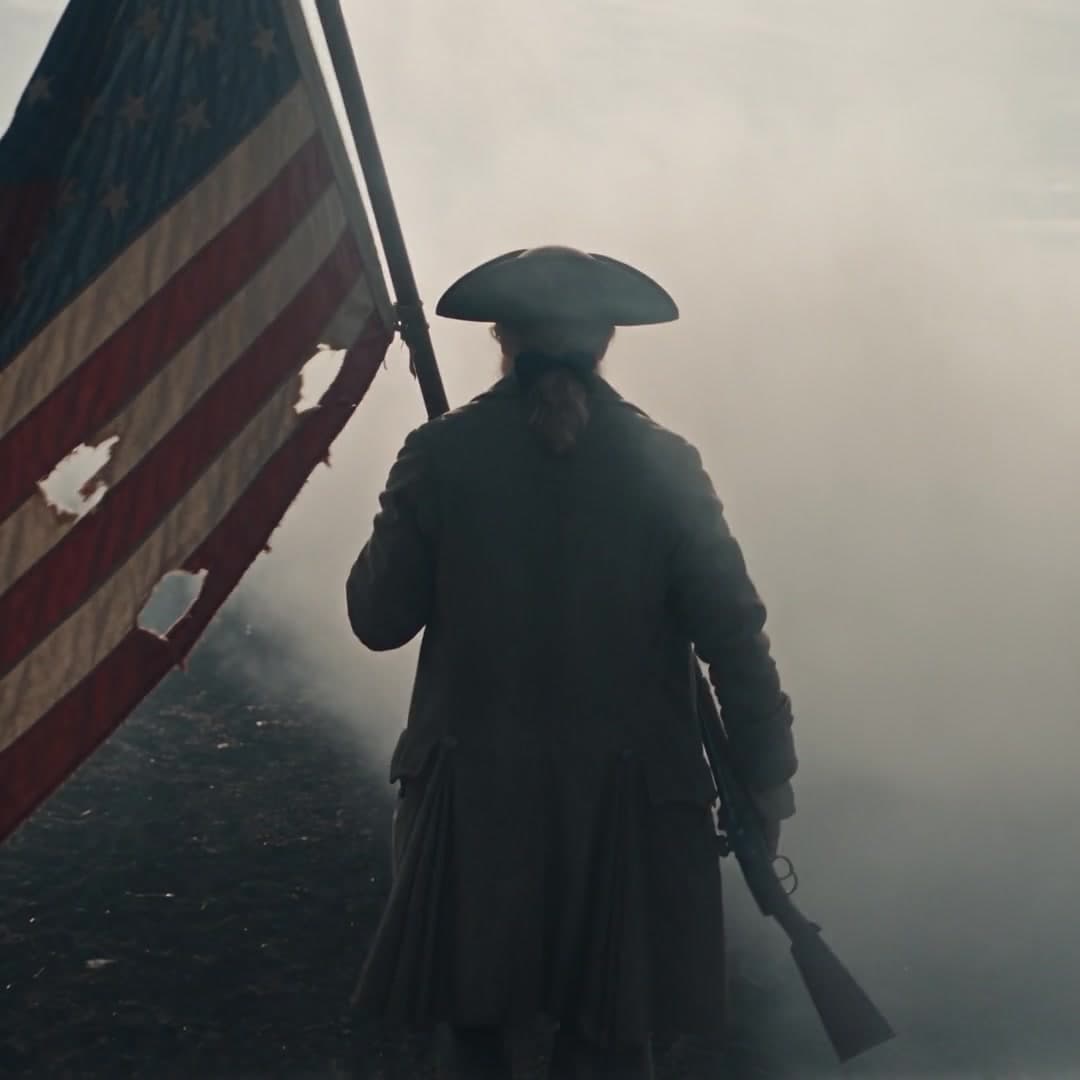
5 to 10 s: 1776, a smoking battlefield. Behind the sailor, the man now wears a weathered dark coat and tricorn hat and carries a torn thirteen-stripe flag on a pole, a musket in his other hand. A line of soldiers fires a volley; white musket smoke rolls in and fills the frame.
10 to 15 s: 1870s, a dusty frontier town. The smoke thins to blowing dust: he walks down a dirt street in a long ragged duster and black cowboy hat, a revolver hanging at his side, a burning wooden saloon ahead pouring grey smoke. A galloping horse crosses close in front of the lens, kicking up a wall of dirt.
15 to 21 s: a cattle drive on open plains. Out of the dust he rides a bucking black longhorn bull, low angle, hat brim shading his face, ragged shirt whipping in the wind. SPEED RAMP: smooth deceleration into extreme slow motion as the bull twists, dirt clods and dust hanging in the air, his coat rippling, the bull's breath steaming, then a smooth snap back to real time. Clods of dirt fly into the lens.
21 to 26 s: 1944, a ruined European town. Through the dirt, he walks over rubble in a muddy olive combat uniform, netted steel helmet and heavy pack, a rifle slung over his shoulder, a shattered stone church ahead and black smoke boiling into the sky, distant artillery thudding. A thick wall of black smoke sweeps across the frame.
26 to 30 s: today, a high grassy ridge at dawn. Out of the smoke he walks in a plain dark work jacket and cap toward a large American flag snapping on a tall pole, wind flattening the grass. The camera rises slowly past his shoulder as he stops below the flag and the flag ripples across the grey sky. The flag and grass keep moving to the last frame.
Before your first Short
Questions about seamless transitions.
- How do you make seamless transitions in an AI video?
- Write them into the prompt. Ask for a single continuous take with one camera move that never stops, end every timed beat with something that covers the lens (a person crossing close, smoke, dust, an animal charging the camera), and open the next beat from inside that same element. The scene changes while the frame is covered, so it reads as one shot.
- What can you use to hide a transition in an AI video?
- Anything that can fill the frame for a split second and belongs in the scene: a person or a horse crossing close to the lens, a volley of gun smoke, a wall of dust, a subject charging into the camera, or a wave of black smoke. Giving the wipe a cause in the scene (a volley, a galloping horse) keeps it from looking like an effect.
- How do you keep the same character across very different scenes?
- Keep the camera behind him and never show the face. Then describe what stays the same (tall, broad-shouldered, lean, an unhurried stride) and let only the clothes change. Here a hat brim, shadow or smoke hides his face whenever he turns.
- Was any of it edited together?
- No. Every Era He Walked Forward is one 30-second generation from one prompt in the Shorts tab, on Seedance 2.5 in 1:1. Every transition you see was written into the prompt.
- What is a 480p draft?
- Draft 480p renders the take fast and at a fraction of the full price. If you like it, Finalize 1080p re-renders that same take at full resolution, so you only pay full price for the keeper.
- Can I use this prompt?
- Yes. Copy it from the full prompt above, or open it straight in the Shorts tab, then swap the eras, the costumes and the wipes to tell your own story.
Make your own
Pick your wipes.
Then write the walk.
Lock the camera, cover the lens at every handoff, and roll a 480p draft.
Make your first Short today.
Pray Production Studio is made by Pray.com.